


College Students Save Lives With Their Blood
On April 1, PVCC hosted a blood drive on campus through the American Red Cross. The North Mall Meeting Room had been completely cloaked with white sheets over the windows to allow privacy for the people donating. While those performing the blood draws were unavailable for comment, the Regional Account Manager for the American Red Cross, Terry Atwater, spoke to me about why blood drives at high schools and universities are such an important part of carrying out the mission of the Red Cross.
Over the phone, Atwater said, “High schools and universities are actually our largest contributors for blood donations. They contribute maybe 25-30% of all of our donations. … So we really do appreciate organizations that are in the academic arena, such as PVCC. When they’re [not in session], we really suffer, so it’s important that we have their support.”
“We have to collect upwards of thousands of units of blood a day just to supply area hospitals. Locally, in this region, we need 1,400 units every day, and the way that we do this is by having multiple blood drives, or collection operations, in which we have corporations, businesses, churches, high schools, and military installations, all assisting us in accomplishing this life-saving mission,” said Atwater.
The Red Cross also plays a monumental role in the efficiency of our local hospitals. “We are the primary provider of blood to the University of Virginia Medical Center and practically all other hospitals throughout Virginia and throughout the country,” said Atwater.
When speaking on the scale of the Red Cross’s operations, Atwater spoke of the Atlas-like responsibility his organization navigates in trying to meet its goals. He said, “40% of blood donations actually come through the American Red Cross …. That puts a heavy burden on our shoulders because each day we have to ensure that we have blood to supply the area to meet the needs of possible patients, and make sure that doctors can fulfill their medical procedures, and do so without delay.”
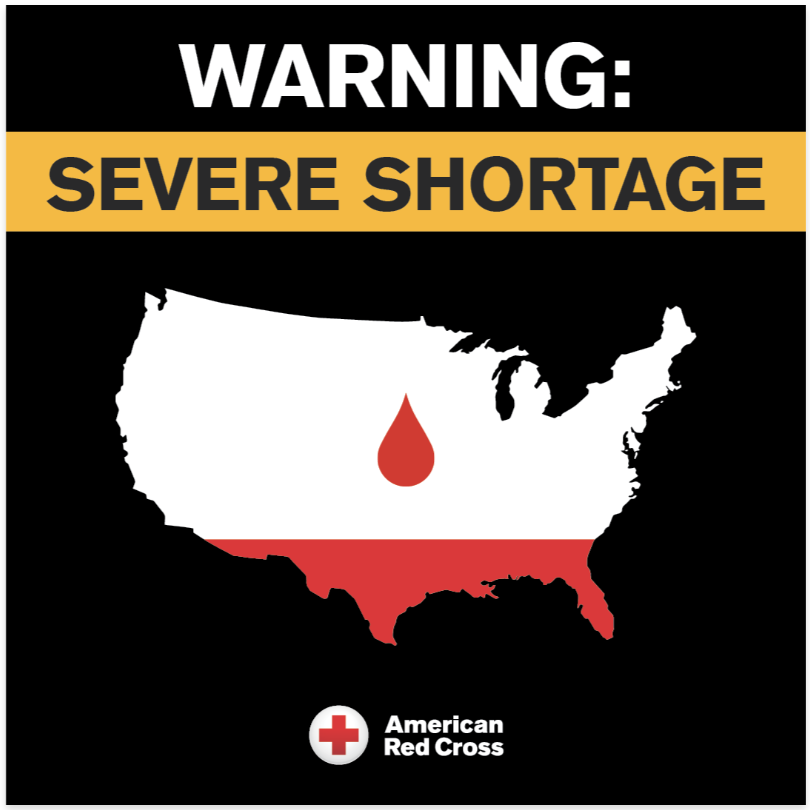
Even with the scale of the Red Cross’s operations, that does not mean they are immune to environmental factors that threaten the sustainability of the work they do. “We’re in a bit of a lull; blood donations have dropped off substantially over the last few years. You know, we have an aging population … and of course, the fact that we had a major epidemic, or ‘COVID scenario’ that caused a lot of ripples in our blood donations,” said Atwater.
As donations are foundational to the Red Cross carrying out its mission, the stark turnouts for blood drives threaten the organization’s continuity and force its members to adapt their approach. “We’re trying to bridge that by encouraging younger people to get more actively involved in donating because for a long time our donor base were those in their 50’s, but many of those individuals now have health issues, and medical issues, so they’re not allowed to donate as they were in the past,” Atwater said. His statement suggests that the continuity of the Red Cross’s mission will be a direct result of collaborating with the next generation. For those interested in giving blood, the Red Cross lists its donor requirements on its website here, as well as local drive locations to help those willing to find a location that works for them.