


A Conversation on Congress, Hope, and the State of the American Democracy
On Tuesday, Feb. 24, Speaker Emerita Nancy Pelosi was in the Capitol for President Trump’s State of the Union address. The next afternoon, she was in the Dome Room of UVA’s Rotunda Building for a talk organized by the Karsh Institute of Democracy. The event was the fifth part of the institute’s series, “Congress as a Cornerstone of American Democracy,” and was moderated by Susan Page, the bureau chief of USA Today.
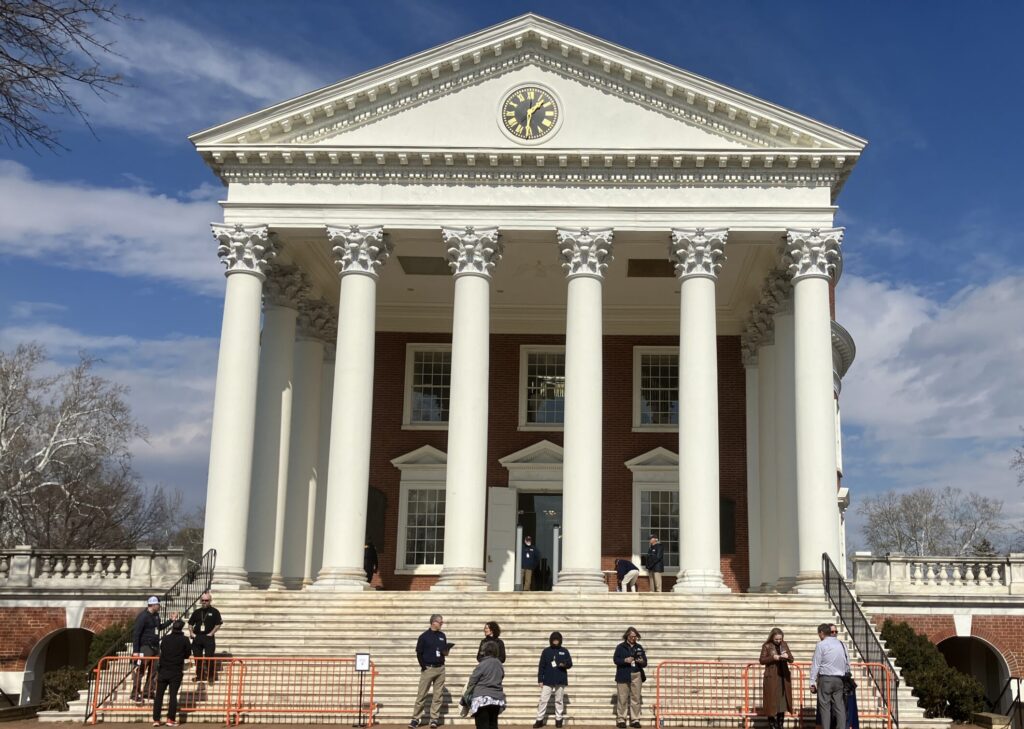
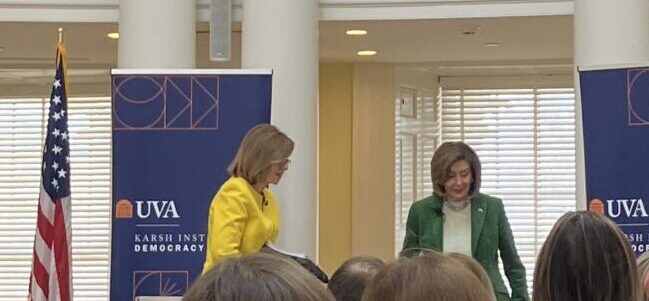
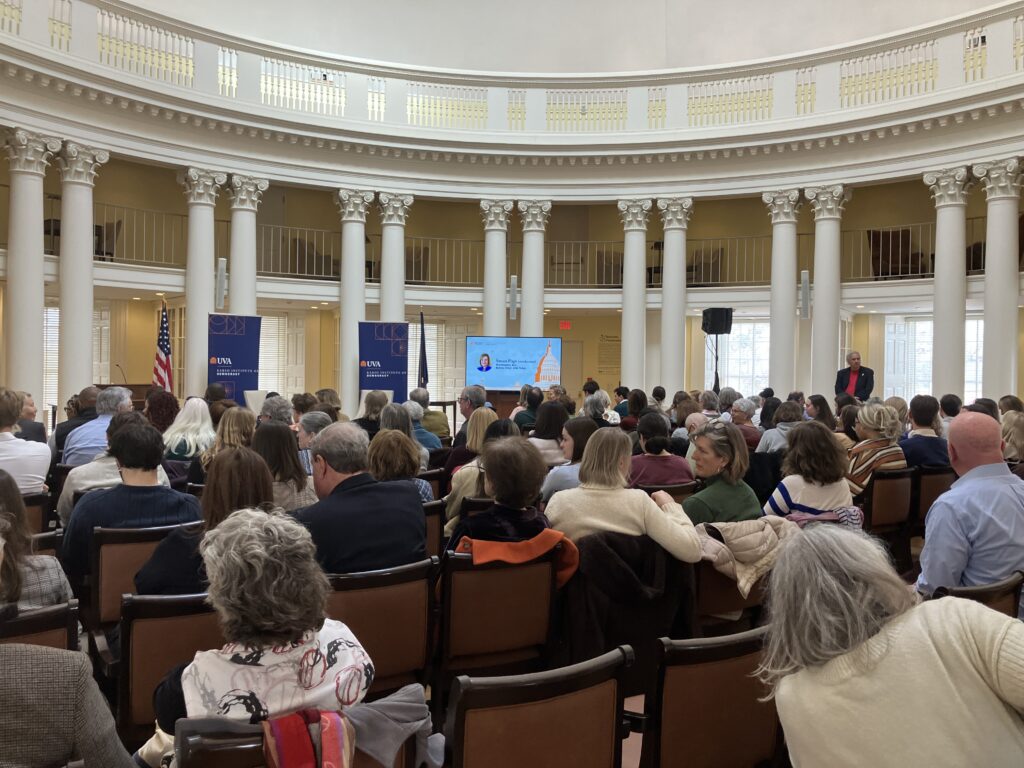
The event was scheduled to begin at 2 p.m., but the room was nearly full by 1:30 p.m. Roughly 140 attendees sat on the main level, while a few others sat in the balconies or stood around the room, which was filled with natural light from the many windows and skylight. The building was designed by Thomas Jefferson, founder of UVA and one of the framers of the very Constitution that established Congress. Pelosi and Page entered shortly after 2 p.m., the former in a bright green pantsuit and the latter wearing a neon yellow blazer. The two women were introduced by Melody Barnes, the executive director of the Karsh Institute.
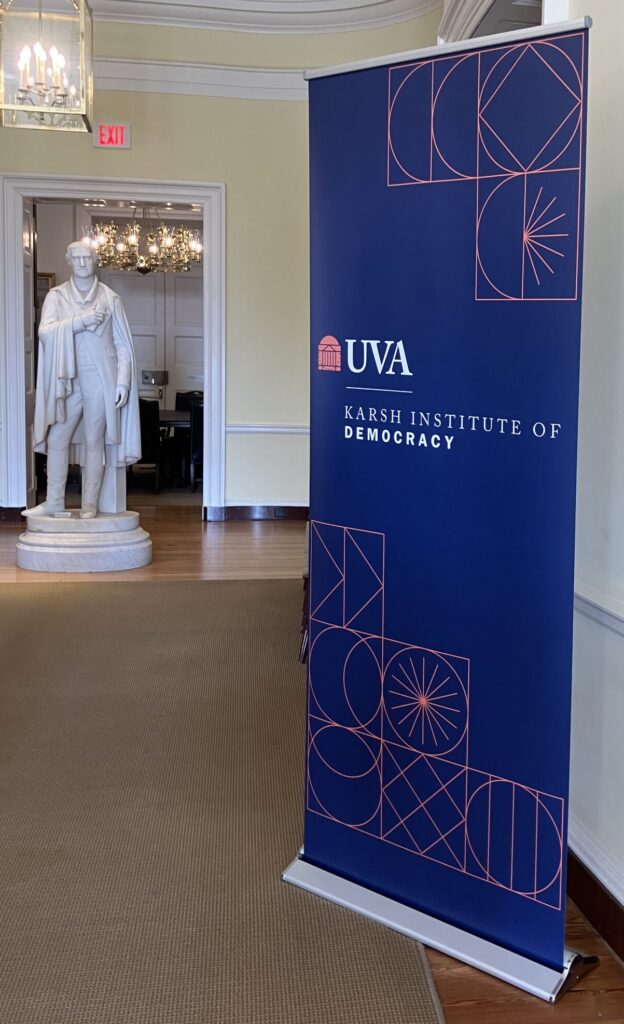
Barnes first described the series of talks, explaining how it featured speakers with a range of ideologies and was intended to bridge these differences to focus on the strength of the American government’s institutions. Barnes then underscored Pelosi’s legislative accomplishments, leadership, and renown as a politician, and described Page’s understanding of the political ecosystem. The introduction, along with the entire event, was frequently interrupted by applause from the audience, who were particularly enthusiastic when Barnes mentioned Governor Abigail Spanberger.
Page and Pelosi’s conversation, which lasted about an hour and was followed by questions from the audience, touched on many topics related to Congress and politics, but the main message Pelosi had was one of hope. While Pelosi referred to the Trump administration as a “regime” that was “completely eliminating” the separation of powers and checks and balances, which she stated were “the genius of the Constitution,” and said she believed American democracy was in peril, she remained firm in her conviction that the goodness of the American people could overcome these challenges.
Despite Pelosi’s hopeful tone, the former Speaker of the House said that the current political landscape was unlike those of past administrations. She explained that while differences in political opinions were as old as the country, politicians used to share common values and a respect for patriotism and loyalty. Pelosi said that politicians should be opponents, not enemies, and recalled her experiences with George H.W. Bush’s administration, where there was “so much friendship” despite ideological disagreements.
Pelosi offered words of advice, wisdom, and reassurance to audience members throughout the conversation. She repeated the phrase, “know your why,” to those involved with or interested in politics, adding that her “why” has always been the one-fifth of American children who go to bed hungry. She said this issue is what changed her from a “housewife to House Speaker,” and added that, “sometimes you have to throw a punch, for the children.” She said that the greatest disappointment of her career was that “we haven’t done enough to protect kids from gun violence.”
Another recommendation Pelosi had was to “know your power,” because “public opinion means everything.” She said that American democracy was at stake and emphasized the importance of the upcoming midterm elections as necessary “to save democracy.” She also said that there was nothing more wholesome for the political system than the increased participation of women, not only in politics but in academia and the economy as well. Pelosi concluded her talk with words of encouragement for those disillusioned with the current political state: “We don’t agonize, we organize,” because “the times have found us to save our democracy.”