



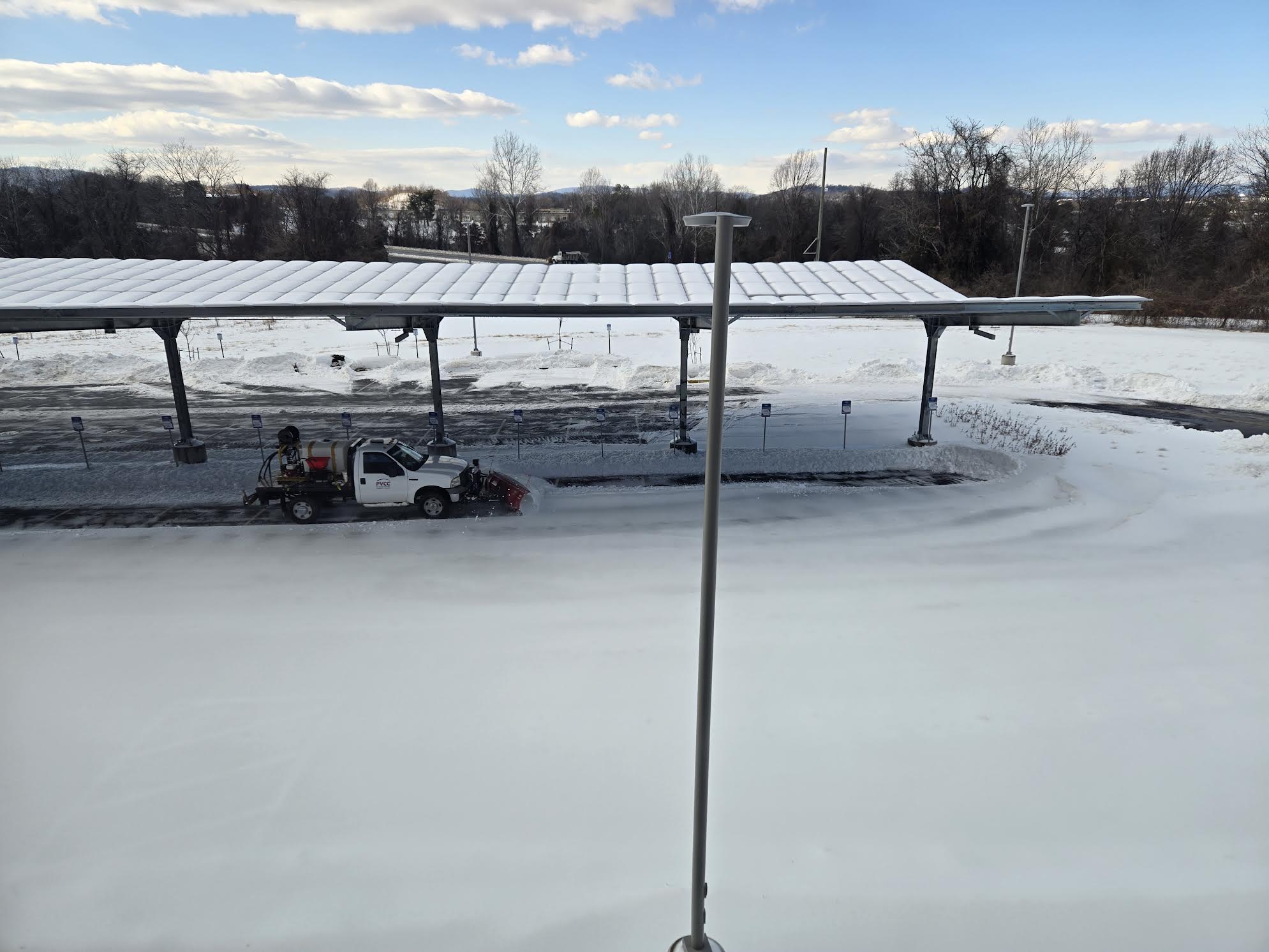
Efforts on the Ground
The snowstorm on Saturday, Jan. 25, that blanketed most of Charlottesville with half a foot of ice posed a serious challenge to the city in terms of accessibility to many areas. In interviews with the Vice President of Finance & Administrative Services, Scott Jefferies, and Facilities Director Kim McManus, they explained the steps taken to reopen campus after a week-long shutdown and the biggest challenges faced during the removal.
Sitting down in Jefferies’ office in the main building of PVCC, he answered some questions about the decision process behind closing the campus and what steps were taken to reopen as soon as possible. When asked what information he relies on when deciding whether or not to close campus, Jefferies said, “We look at forecasts that we get from the National Weather Service, and we receive information from the Virginia Department of Emergency Management.” Jefferies was also part of a statewide call with emergency managers on Friday, Jan. 24, before the storm, where they discussed next steps based on the forecasts they were receiving, and what the Buildings and Grounds team needed to do to prepare the campus for the incoming conditions. The decision was made to close the campus starting that Saturday, Jan. 25, to lay down a brine (a salt solution sprayed on roads) as a preventative measure against ice and snow.
When listing the names of faculty who helped manage the conditions at PVCC, Jefferies named the Police Chief, Michael Littek, and the Facilities Director, McManus. “We have a good team,” Jefferies said about McManus and Littek, “We’re in constant communication, and we’re checking conditions and making the best call that we can.” “Our Buildings and Grounds crew, when they came in and started doing the brining and the prep work ahead of the storm before anything started falling, they ended up staying overnight working, sleeping in buildings, to keep up with the stuff as it was falling. And I think it’s because of that we were in a position to open yesterday,” Jefferies said. As it turns out, the Buildings and Grounds crew had come in on Saturday, Jan. 24, to make sure preventative measures were installed and stayed overnight to fight against the snow and ice accumulating too much.
McManus further explained what that removal process looked like. “We were here for 48 hours straight,” McManus said, “From Saturday at 5 o’clock, we worked all the way through till 5 o’clock on Monday.” Throughout the night and into the next day, the Buildings and Grounds crew consistently plowed the main thoroughfares of PVCC as snow fell, and laid down more brine so the campus itself could remain accessible after the storm ended.
“It was consistent efforts throughout the storm, a lot of breaks, a lot of coffee; I had a sleeping bag and put down some yoga mats on the floor of the gym,” said McManus. During their 48-hour shift, some other PVCC community members offered what support they could to the Buildings and Grounds crew. “We ended up with plenty of food…student affairs was nice enough to bring us a bunch of food, also the health science folks over in Keats,” said McManus.
After the storm had ended, the sleet that compacted the snow solidified, turning into what Jefferies has since dubbed “snowcrete.” When asked how his crew managed those conditions, McManus said, “The smaller, lighter machines couldn’t even get traction on it, so it had to be chipped away with shovels and other implements,” and according to McManus, it was particularly hard for those manually picking away at the ice to even move around. Their efforts continued for a week, slowly clearing the “snowcrete” out of the various parking lots and sidewalks around PVCC.
“Come Sunday, we came back and checked conditions again and said, ‘we’re ready to roll,’” Jefferies said about when it was decided campus conditions were safe.
Because the days now rise above freezing temperatures before plummeting back down to below freezing, ice accumulating on the road from the melt becomes a serious hazard for drivers. Because of this concern, the Buildings and Grounds Department continues to work to maintain the safety of all students and faculty members. “We’re constantly in this cycle now of clearing the ice out in the morning and throwing down more salt. But we’ll keep doing that if it gets people from their car to the buildings in a safe way,” Jefferies said.