


Henry Louis Gates Jr.’s Thoughts on Harvard, Jefferson, Genetics, and More
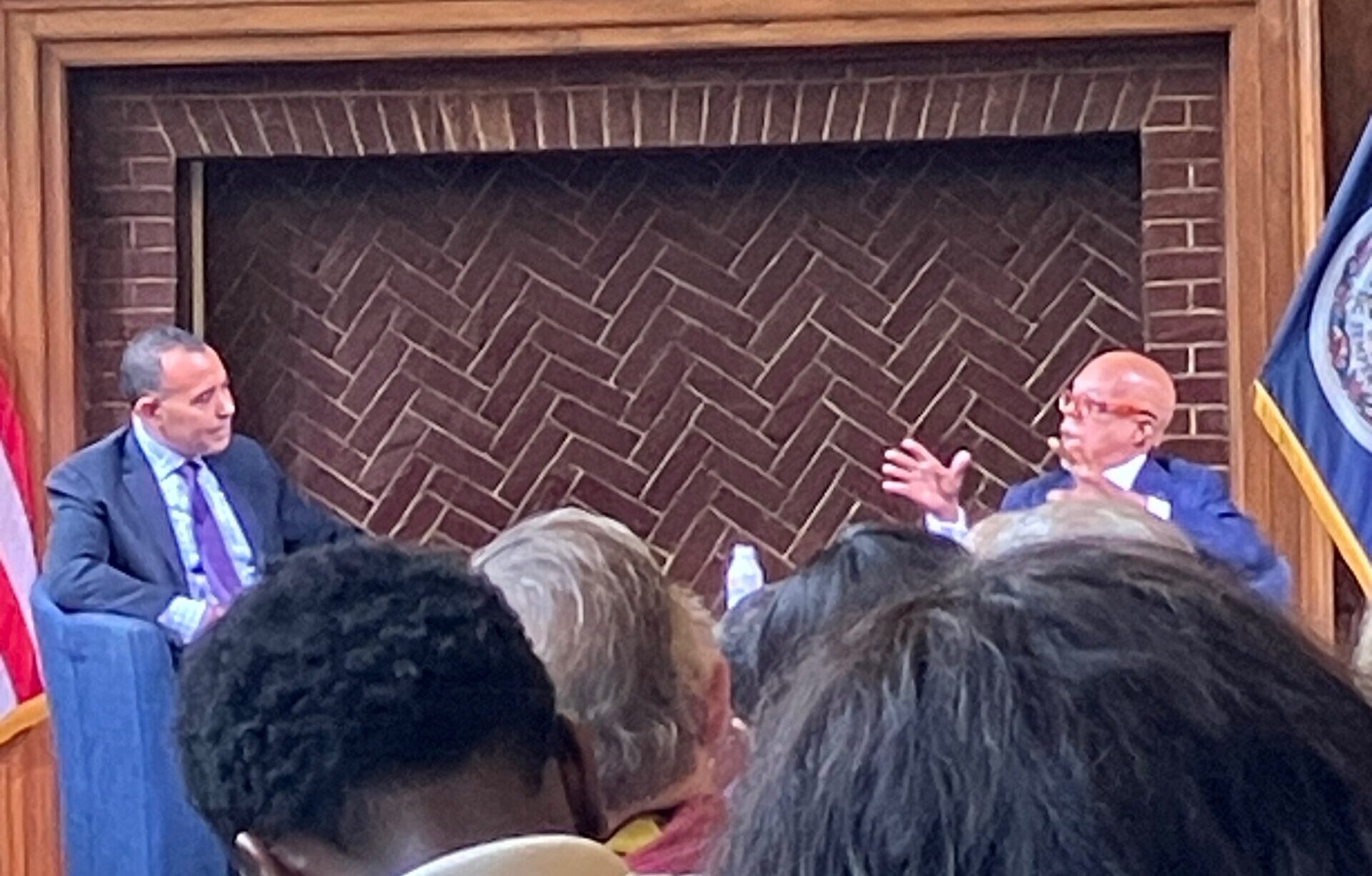
On Tuesday, April 14, Dean Ian Solomon of UVA’s Frank Batten School of Leadership and Public Policy hosted Henry Louis Gates Jr. for a fireside chat, an event open to UVA students and community members in which faculty members hold discussions with special guests.
Gates is the recipient of the 2026 Thomas Jefferson Foundation Medal in Citizen Leadership. The award “is the highest external honor bestowed by the University of Virginia and recognizes the achievements of luminaries who embrace endeavors in which Jefferson excelled and held in high regard,” according to the Batten School website. Two other medals were awarded as well, to Chief Justice of the United States John G. Roberts Jr. for law and Jeanne Gang for architecture. The medals were awarded as part of UVA’s Founders Day celebrations.
The fireside chat began at 11 a.m. and lasted roughly one hour. It was held in the Garrett Hall in Batten. The event was well attended, with the large room nearly entirely full with UVA faculty, students, and members of the community.
Solomon introduced Gates before their conversation began. Solomon shared what he called Gates’ “staggering and intimidating list of accomplishments,” which includes hosting the PBS series Finding Your Roots and serving as Harvard University’s Alphonse Fletcher University Professor and director of the Hutchins Center for African and African American Research. In addition, Solomon shared his personal connection to Gates: when Solomon was a student at Harvard, he was a student in Gates’ seminar. Solomon shared anecdotes from this class as well as praise of Gates’ career.
After briefly discussing Gates’ belief that race and gender should not determine what subjects a person is allowed to teach – because there are “only two kinds of scholars: good scholars and bad scholars,” according to Gates – the conversation moved to a visit to Monticello the night before to celebrate the winners of the medals. Gates remarked on the fact that Thomas Jefferson used a dumbwaiter in his dining room and wondered if this was intended to hide the presence of enslaved people at Monticello.
This train of thought led the two to discuss topics including the chain of being, Jefferson’s views on slavery, the poet Phillis Wheatley, and black literature in American history. Gates described how “literature, inherently, was political,” as it was viewed as reflecting the skill and worth of the author’s entire race, gender, religion, or ethnicity.
Solomon then asked Gates to share how he was impacted by the 2017 Unite the Right rally in Charlottesville. Gates said that “the rise of hate crimes disproportionately affects Blacks and Jews.” He continued to describe how the two groups of people should work together to fight discrimination and hate crimes. Their conversation flowed to Gates’ experiences teaching at Harvard, his willingness to discuss controversial topics with his students, and the increased presence of African American studies at major universities.
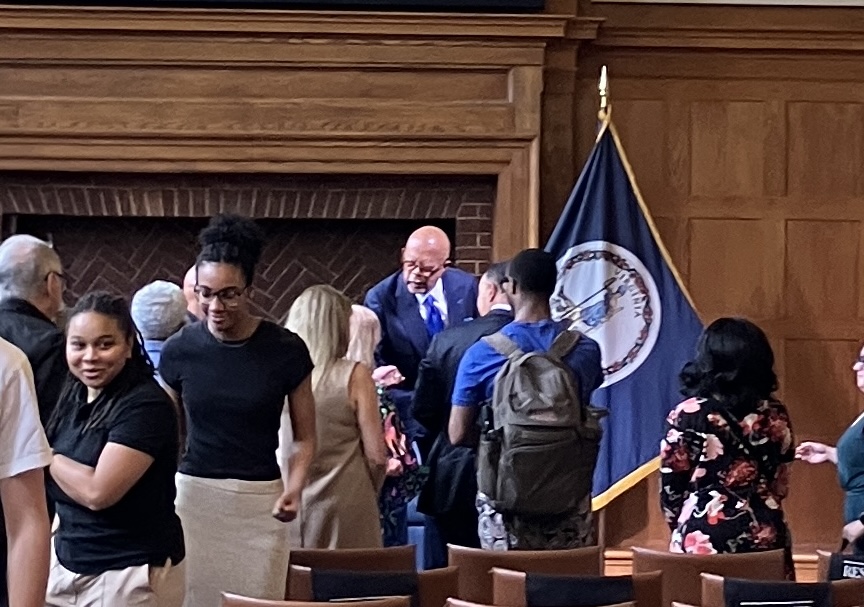
The conversation concluded with Gates sharing how he started working in television. He described his childhood interest in learning about his complicated family background, especially his white ancestors. As he grew up, he also became interested in his African heritage. After receiving genetic testing and discovering he was descended from Nubian royalty, which Gates joked suited his idea of himself, he was inspired to create his show African American Lives, which he would later reinvent as Finding Your Roots.
Gates continued to describe his interest in genetic testing, which allowed him to also identify his previously unknown white great-great-grandfather, a “deeply, deeply moving experience.” Gates said, “We’re not determined by what our ancestors do, but we are affected by what our ancestors do.” He added that we can gain knowledge by learning about our ancestors and that by looking at people’s genetic composition and ethnicities, “You realize there’s no such thing as racial hierarchy and there never has been.”