

Nature and Human Nature
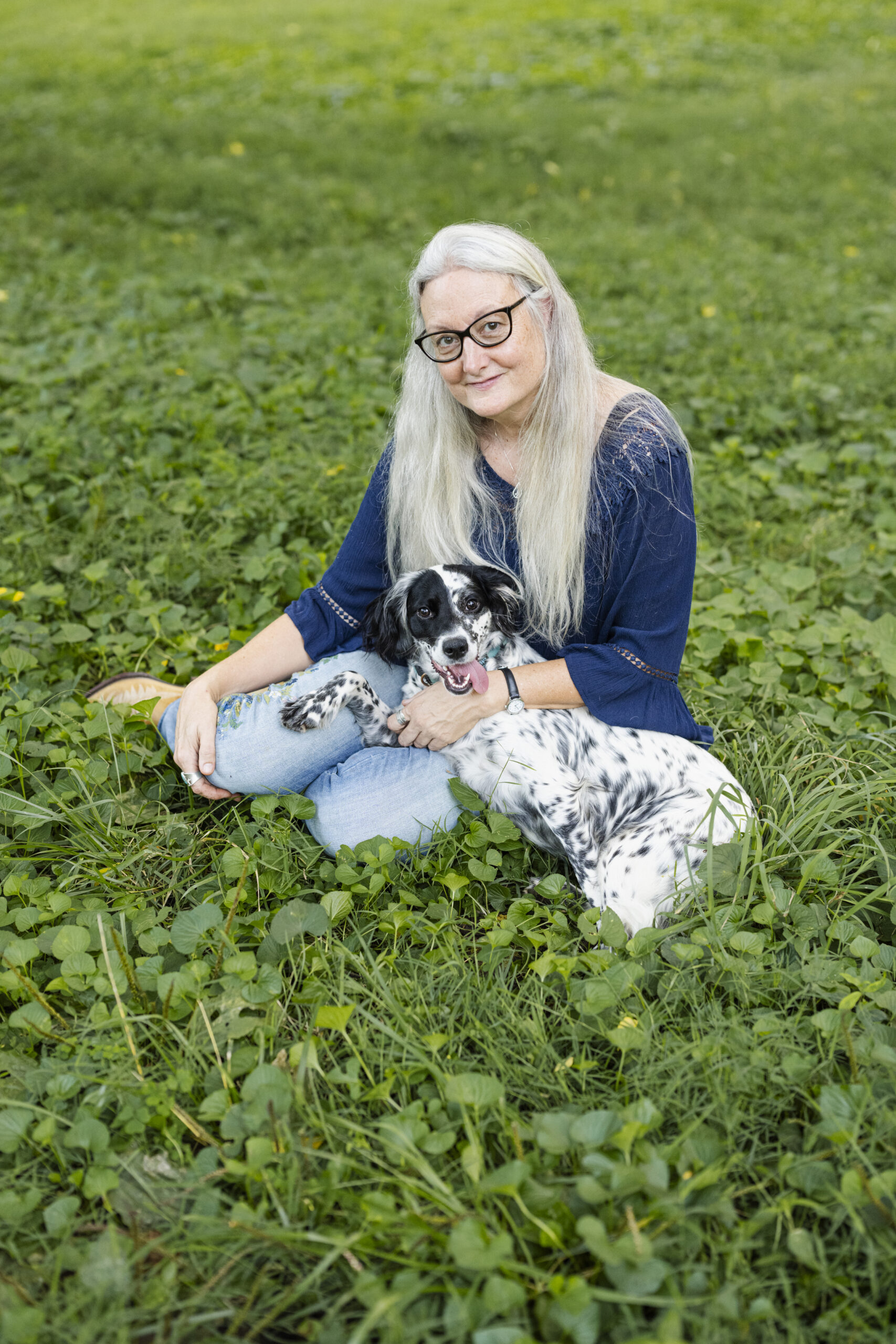
Dr. Jamie Reaser has a tattoo on her arm that reads, “she lived a magical life.” She came up with the idea in 2024 while visiting Peru and working with the Shapibo medicine people. She wrote several poems during her visit, including one that included the line now tattooed on her arm.
“I decided to put it on my arm as a reference point for going forward and, in some ways, treat it like a compass inquiring about true north,” she said. When she reaches major decision points in her life, she uses the tattoo to remind herself to stay in alignment with the message: live a magical life.
Reaser is a conservation biologist, author, and poet who has worked abroad in over 60 countries. Her work in US policy has led to the passage of policy papers protecting endangered species worldwide. In particular, her research on amphibian declines helped prevent many species from being listed under the US Endangered Species Act.
Reaser’s work at the interface of science and policy began, rather informally, she notes, in 1991. She and other scientists were working to get the Smithsonian Migratory Bird Center off the ground. Concerns about population declines in many migratory bird species were relatively new, and researchers were only just beginning to examine possible causes.
As concerns mounted, the research began to move into the policy dialogue both nationally and internationally. Reaser became involved in a group called Partners in Flight, which brings together state and federal agencies and various conservation groups to address the concerns driving the decline, sparking a nationwide policy movement. This research on cause and effect was successfully embedded in policy, and Reaser is now known as the co-founder of the Smithsonian Migratory Bird Center.
She then worked for the US State Department, serving as a formal negotiator in UN conventions such as the Convention for Environmental Cooperation and the Ramsar Convention on Wetlands. She also worked informally with other countries’ governments. The US, working closely with France and other governments, formed the International Coral Reef Initiative. This is a body that brings marine scientists, managers, and policy makers together for informal discussions, Reaser said. This often led to governments adopting these position papers and policies and formally establishing them through policy negotiations. Because of her success in this field, she has won the Roger Revelle Fellowship in Global Stewardship as well as the Science, Engineering, and Diplomacy Fellowship.
Reaser’s interest in nature had been developing since she was a child. “My earliest memories are of watching slugs going across little slate stepping stones in the backyard and seeing the little shiny trails they left behind,” she said, “and singing songs to ladybugs that were on the blackberry bushes at the edge of the property.” Despite these being her earliest memories, she said that they are more prominent than the rest.
At six years old, Reaser developed an ear infection that led to a coma she was not expected to live through. She was told by doctors that she would sustain permanent physical and neurological impairment, and likely not progress past an intellectual third-grade level. When she awoke in the hospital, the room was filled with cards, flowers, and stuffed animals, but a terrarium caught her attention. “I very clearly kind of sensed that I was brought back to heal this relationship between people and nature; that was my path,” Reaser said.
Reaser has since earned a B.S. in field biology and studio art from the College of William and Mary and a PHD in biology from Stanford University. She said that knowing what she was meant for served as a defense mechanism against other people’s low expectations. She has followed that thread ever since.
How do humans and nature connect? “It’s the recognition that humans are animals,” Reaser said. “So much of our framing, even in the environmental community, is framed from a separation of humans and natural systems.” This, she said, is the driving force behind most of the problems we are facing in environmental and ecological systems today.
Reaser said the mindset of people around her as she grew was: How are you going to make enough money to buy a car and a house to sustain a life? After the Great Depression, security became ingrained as a core value, Reaser explained. “To go through one’s youth education with the guiding question being: How can you be in alignment with ecological systems versus how can you make progress happen, progress being defined by capitalistic processes,” Reaser said, “Those are very different optics for going through one’s education and socialization.”
Reaser pointed out that around Schuyler, a small neighborhood in Albemarle County where Reaser lives, there are large amounts of Chinese silver grass, an invasive species that is highly flammable. Most people do not register invasive species or know the dangers they pose, but coming together as a community could create a wide-scale effort to reduce wildfire risk. “This is probably one of the only properties that doesn’t have that grass on it at this point,” Reaser said about her home, smiling.
She has made an effort to make her property regenerative. “I’ve been planting trees that produce food: native trees, so persimmons and pawpaws and all sorts of trees that produce berries and nuts. So that if we have food supply issues over time, this property is going to have more than it needs,” Reaser said.
How can we as a society move towards this? Reaser explained that in the U.S., we are an independent-minded society, where we do not act as a whole, but as individual parts living separate lives. We have communities, but we are not community-based, and our lives ultimately revolve around ourselves. As Reaser put it, “human relationships are evolving into fields of electrons.”
Bioregionalism is the idea that cultural systems should be defined by their local ecosystems. “The Piedmont ecoregion is different than a desert ecosystem, or is different from even the valley on the other side of the Blue Ridge,” Reaser said.
Many indigenous cultures still operate in this manner, living off the land that surrounds them. The word “indigenous” means “of the place,” but communities whose lives are shaped solely by their environment are dwindling. In the United States, society is formed around consumerism. “In a generation or so, people stopped learning how to grow their own food. Because it was seen as something only people who can’t afford to buy prepackaged food would be doing,” Reaser said.
Reaser is also a renowned author. Her books and poems detail the relationship she has found between nature and humans and the importance of reestablishing that connection. She has received two Nautilus Book Awards, and her works have appeared in many magazines, textbooks, and art installations.
Her focus has shifted towards epidemiology, which is essentially the study of how disease spreads. After COVID-19, she began studying the links between environmental factors and the pandemic’s spread. Along with her research, Reaser’s current business, Rain Crow Consulting, offers support for grief related to climate change and for dealing with these changes psychologically. Though her work has spanned a great distance in the field of conservation and policy, she has continued to follow the thread of connection between humans and nature in all of her work.
Reaser’s attentiveness to the environment has shaped the relationship between science and policy. She is a poet and a conservationist who continues to advocate for the ecosystems that surround us. Reaser has thoroughly lived up to her purpose of restoring a relationship between humans and nature, and reminds us to “live a life that is regenerative.”