


Are Seven-Week Classes Right For You?
PVCC has been making several changes to its course schedules in recent years. Transitioning from a 16-week semester to a 15-week one, for example, and the expansion of seven-week courses. Many students remain unfamiliar with exactly what seven-week classes, or accelerated terms, entail. Are they just the same as a regular 15-week course, just crammed into a period of only half the time? Are they easier? Are they harder? Can students graduate faster? How do they affect financial aid? The confusion surrounding these accelerated terms can discourage students from taking them, which can lead to them missing out on the opportunities they provide.
So what are seven-week courses? Simply put, they’re just that — entire courses, usually taken across a full semester, offered in two separate seven-week periods within the semester. Less simply put, they’re complicated. Not all seven-week courses are created equal. They’re still new, so professors are getting accustomed to teaching in this format just as students are getting accustomed to learning in it. According to Dr. John Gulley, a professor of philosophy at PVCC who has taught seven-week courses, the classes differ from professor to professor, just like any other class. “It depends on how the instructor has re-envisioned the seven-week model,” Gulley said.
Gulley went on to explain that some professors take the “big learning goals” they have for students and create a new, accelerated curriculum centered around ensuring that students leave the course with the proper concepts they would have learned in a 15-week course. Others, he said, choose not to adjust their curriculum. “Some instructors, they have the exact same content, and they just say, ‘Hey, learn it, and learn faster,’” Gulley said.
Gulley said that seven-week terms may be “different, but not necessarily more difficult.” Assistant Professor of English Adam Quinn, who also teaches seven-week courses, echoed this sentiment. “I do my best to keep the same level of rigor in my 7-week and 15-week classes,” Quinn said. The main difficulty with seven-week courses is the deadlines. Because there is so much less time than in a 15-week course, staying on top of work is crucial. The entire class only takes about a month and a half. There’s very little wiggle room for procrastination.
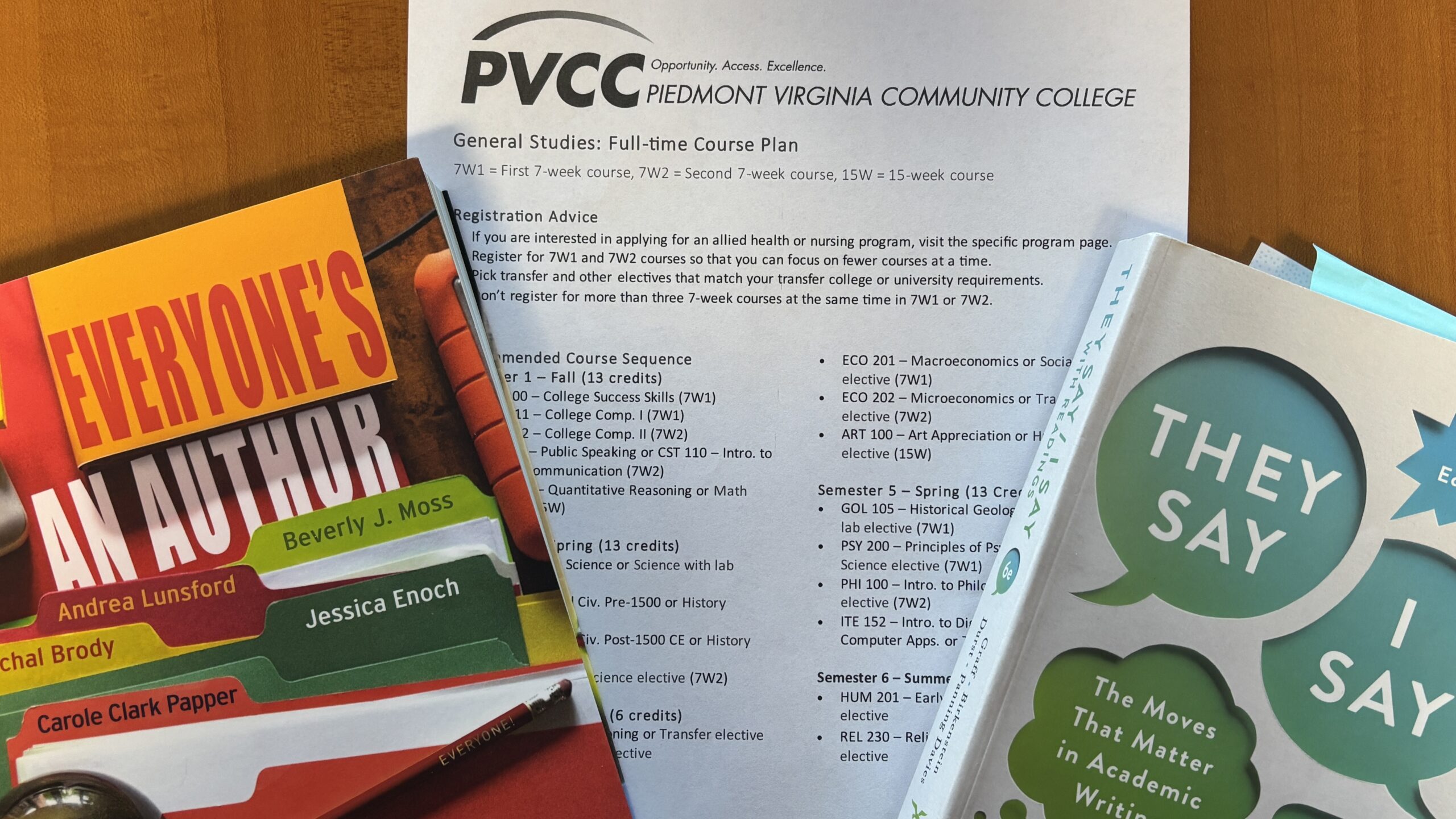
Since seven-week courses can be taken twice in a semester, how would a schedule including them look? Quinn recommends against taking a seven-week course alongside 15-week ones. “You may feel tempted to add a 7-week course to your 15-week schedule just to try it out, but you may accidentally overload yourself instead,” Quinn said. “If you want to try 7-week courses, jump in with both feet and take a full semester of 7-week courses.”
Instead of taking four or five classes across a 15- or 12-week period, seven-week courses allow students to remain designated as full time while only focusing on two or three classes at a time. The course load may be about equal, given the amount of learning expected within the timeframe, but there are fewer classes to keep track of and attend. As long as students take at least twelve credit hours in a semester, they are considered full-time students and are thus able to access more financial aid. With seven-week classes, students can be full time while only taking two classes per seven-week period. Gulley says this will allow more students who would ordinarily be part time to be full time, which makes them more likely to graduate and move on to four-year institutions. “That’s the goal, really,” he said.
Seven-week classes are usually offered in a hybrid or online format. This is another point for flexibility — even in hybrid courses, students only attend class perhaps twice a week and do the rest of their learning online. In-person class meetings can be used to connect with students, check in on their progress, and provide additional education. In some courses, such as philosophy and literature classes, students might do most of their reading and lectures asynchronously and use class time for discussion and reflection. “You’re just trying to create that space for that advancement and curiosity to flourish,” Gulley said.
Because of their structure, accelerated terms require a lot of responsibility. In online sections, the expectation is on the student to keep track of their coursework. Extensions depend on the professor, but there’s usually very little time for extensions given the rapid due dates. If a student doesn’t take responsibility for studying course material outside of class, “it can snowball,” Gulley warned. But for students prepared to commit to the pace of an accelerated term, it can be a fantastic alternative to 15-week courses.
Seven-week courses benefit more than just students who would otherwise be part time. Certain classes require prerequisites or are otherwise recommended in a specific order, and seven-week courses open up more opportunities to take classes necessary for graduation. A student can take ENG 111 in the first seven-week period and ENG 112 in the second seven-week period, and then that student would have two required classes, one of which requires the other as a prerequisite, finished in one semester. This also helps fight against the “drain” many students experience over breaks when they are not actively keeping up with their studies.
Some students might benefit from shorter, more intense classes. Quinn pointed to burnout and lack of motivation as major roadblocks students run into two-thirds of the way through a regular semester. For students who struggle with these, seven-week courses may be a better fit. Rather than stretching effort across a full 15 weeks, students can “work twice as hard for half as long,” Quinn said.
With all that said, seven-week courses definitely aren’t for everyone. Gulley said “more passive” students who don’t commit to learning the material outside of class tend to fall behind. Students who aren’t used to applying themselves as much will find themselves disadvantaged in the seven-week format. Because of the shortened timeframe, Quinn said, there’s less repetition involved in seven-week learning, “so they may not be the best choice for courses you might find especially challenging.”
In summary, seven-week courses are intensive courses best suited for students who are prepared for an aggressive course load. They add a pathway to full-time financial aid that students with responsibilities outside of school might not otherwise be able to access. They’re meant to be taken a few at a time rather than a full 12 or 15 credits at once. For more challenging classes, or courses students might want a more extended and in-depth education in, they might not be the best choice.
Quinn is participating in the piloting of seven-week literature classes in the 2026 fall semester and encourages interested students to register. Gulley recommends that any student considering taking a seven-week course stop by the professor’s office and ask them about it. The best way to know the structure of a class is to go straight to the instructor. Students who take a more active role in deciding what course structure works best for them are taking a more active role in the outcome of their education. Gulley said that the college is working hard to ensure that students get the most out of their time at PVCC: “Everybody has the goal, the same goal, of helping these students succeed.”