
Women in Literature: PVCC’s Class Exploring Feminism Through Writing
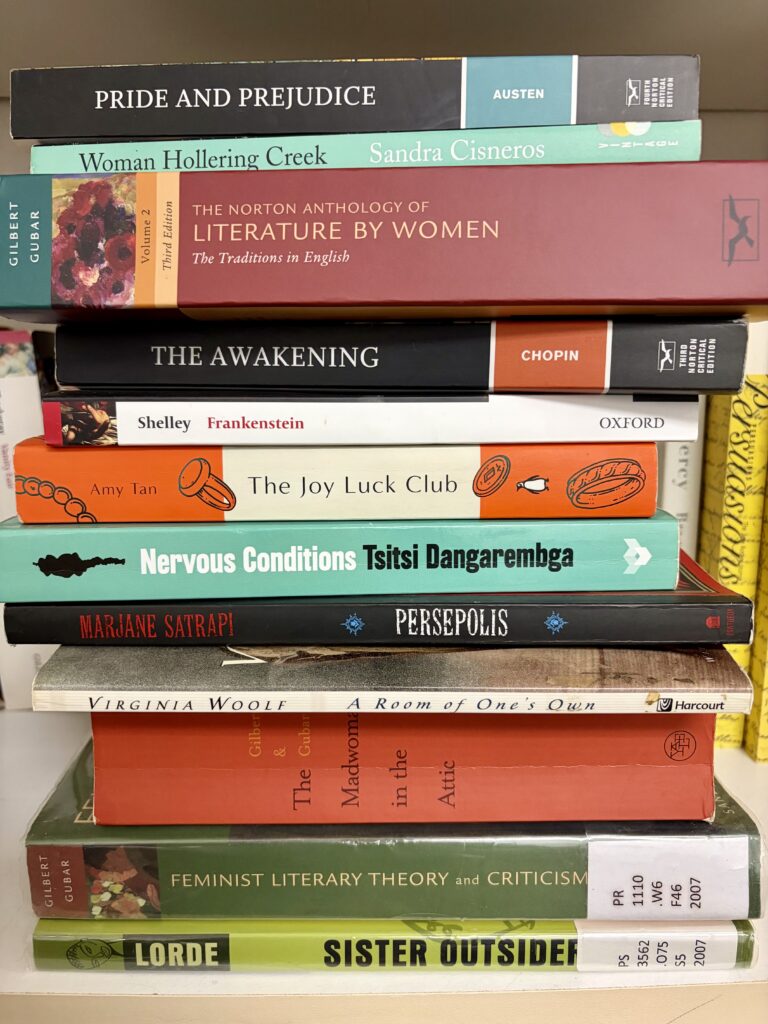
What do Nervous Conditions, Pride and Prejudice, and The Madwoman in the Attic have in common? They are three of the texts written by female authors that students in PVCC’s Women in Literature course will read, analyze, discuss, and write about.
Women in Literature is taught by Dr. Manon Ehrlich, an assistant professor of English at PVCC. The course number is ENG 275. It will next be offered in the Fall 2026 semester, on Tuesdays and Thursdays from 2:00-3:20 p.m. in room 248 of the Main Building. The prerequisites for this course are ENG 111 and 112. Women in Literature is a Writing Intensive Course.
The course will involve reading texts written by various female authors from different time periods and locations and analyzing the writings within their literary contexts. The texts are mostly fictional novels and short stories, with some theoretical content, comics, plays, and poetry. Students will explore how authors’ gender affected their lives, writing, and cultural and literary impact. In this class, students will develop skills including close reading and literary analysis.
Ehrlich said class sessions will include a mix of quick writing, lectures, discussions, activities, and independent work. The course is divided into seven thematic units and includes assignments such as papers, journals, small quizzes, and a final exam. Ehrlich said that the goal of the course “is to create a conversation between women’s voices to showcase the richness and diversity of the female experience while complicating our understanding of what it means to be a woman and to write as a woman in various contexts, so we read works from female authors from across the globe.”
PVCC student Eleanor Davidson is currently enrolled in Women in Literature. She said that she liked the reading and discussions and that she has learned more about feminism through the course. She said, “I didn’t expect to like these books very much, but I ended up really enjoying them.” Davidson said she would recommend the course to other students, especially those interested in feminism, history, and culture.
Chiara Harris, who took Women in Literature during the fall semester of 2025, and Jacob Ryder, another current student, would also recommend this course. Both said that the course went beyond exploring feminism and discussed other important issues. Harris said, “One thing I learned from this class was the impact colonizers have on a culture.”
Ryder said he enjoyed applying different lenses of literary criticism to the works read in class and that this method of analysis captured the female experience and helped students understand media beyond literature. He said, “Looking at the intersection of womanhood with other experiences creates a more full literary picture.”
All three students noted that the course involves a lot of reading. Davidson said it would not be a good fit for students who do not enjoy reading. Davidson, who described herself as a bookworm, said she found the amount of reading, writing, and analysis “very manageable.”
Ehrlich added that the course was about more than just feminism. She said, “The course covers a lot of ground and touches on a range of topics like identity, postcolonialism, psychology, politics, immigration, economics, power dynamics, sexuality, etc. As a result, our classroom conversations often veer into broader issues that relate to our individual experiences.”
Ehrlich explained the impact of women’s literature and why it is important to study: “Despite being historically and universally marginalized to varying degrees, women have always sought to express themselves and used writing to find agency in challenging circumstances and, in doing so, they have not only chronicled but also changed the world around them.”
Ehrlich also described the value of studying literature in general: “In addition to precious critical thinking skills, literature builds empathy beyond the scope of what we know. We forget ourselves as we step into the shoes of a character, we learn to care about their stories, and in the process, we create a connection with the writer, someone we will likely never meet. This is something that we can all benefit from.”