


Opening Gambit to Checkmate: Exploring PVCC’s Chess Club
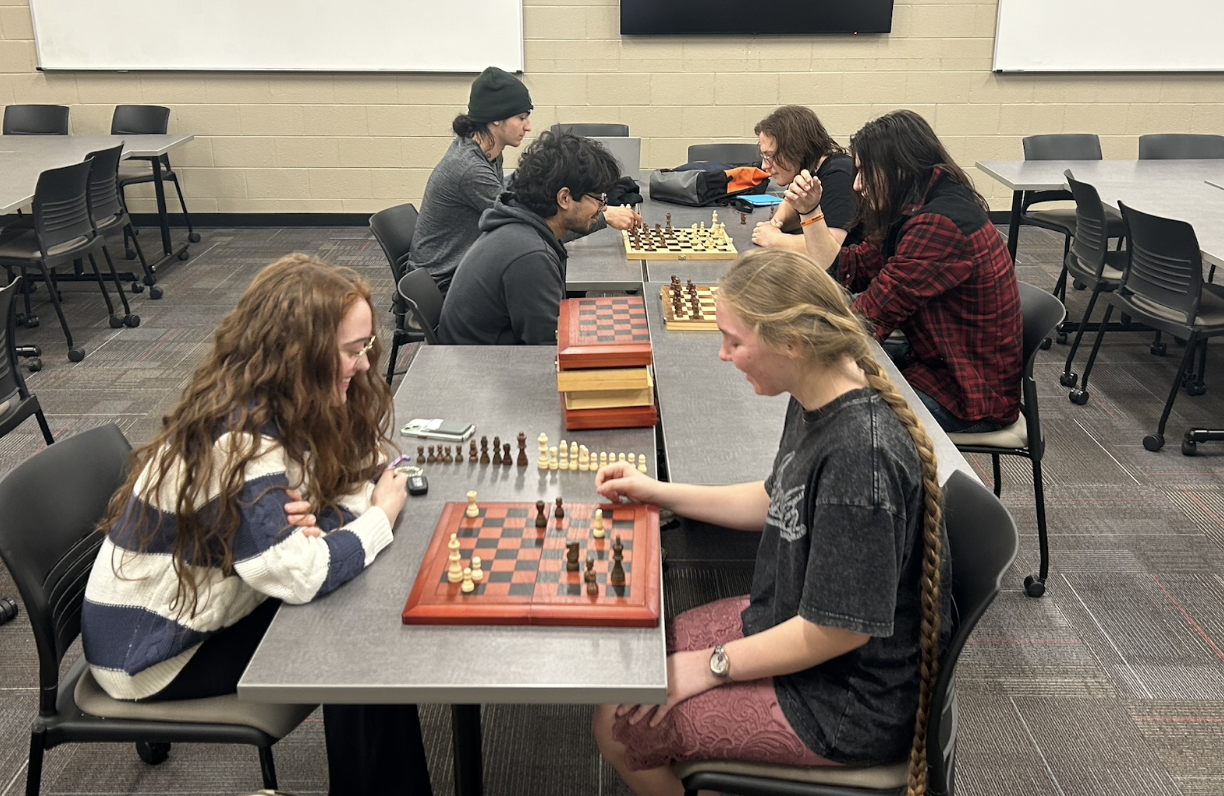
It only took three minutes for Devin Borishansky to beat me in a match, which speaks to both his level of skill and my lack of it. After recovering from my quick defeat, Borishansky was still generous enough to answer some of my questions about the Chess Club, in addition to comments from the future club leadership, Maurilio Hernandez. While the club is composed of members at differing levels of skill, what keeps them coming back is not only the game itself, but the environment they’ve built around it.
For Borishansky, joining the club wasn’t complicated. “I think I just showed up randomly, had an hour and a half long game that I blundered into a draw, and I had to come back to you know…I had to prove myself,” he said. Though he had played chess in different settings before PVCC, being part of the club changed the way he approached over-the-board play. “I probably did start playing differently after joining,” he said. “If I know someone’s better, I definitely think harder. It pushes you.”
One of my biggest takeaways from spending just a little time in the club was the educational atmosphere among members. Instead of competing solely to win, the dialogue is more akin to a tutoring session where opponents will point out the best possible move with an explanation for what makes it so, encouraging those with less experience rather than overwhelming them.
“Once I see something that I’m blundering, I try to see how I could have done better…it’s definitely just wanting to improve myself,” said Hernandez on his approach to bettering his technique.
Hernandez, who will be taking over leadership of the club next semester, describes the atmosphere concisely: “Great vibes. Good people all around.” For him, the draw of chess goes beyond the moves. “I started in high school during COVID,” he said. “It was something to do when I couldn’t see friends. Chess taught me patience…it made me appreciate taking time, not rushing, thinking before you act.”
Professor of Mathematics and club adviser, Dr. Zachary Beamer, also gave his thoughts on the club and how his views of chess have changed since becoming the club administrator. “It’s interesting because, in a certain sense, chess is one of those activities that computers have gotten so much better at than people in the last five, ten years, but that doesn’t stop people from wanting to get good at the game,” he said.
Even in an age when computers play chess better than any human ever could, the club’s members gather each Wednesday from 12:45-2:15 p.m. in Room M158 to learn, compete, and push themselves. For beginners and veterans alike, chess becomes both a social outlet and a place to sharpen their skills, one game at a time.