


¡Aprender Español! A look into SPA 101
Interested in learning Spanish here at PVCC? If so, Beginning Spanish 1 is the perfect start. Taught by Professor of Spanish, Dr. Jorge Grajales-Díaz, SPA 101 is the first class in a four-class sequence, followed by SPA 102, 201, and 202. There is no prerequisite for this class, so students can sign up with any level of experience. Grajales-Díaz does say that “many students come with some skills from high school, and that really helps a lot.”
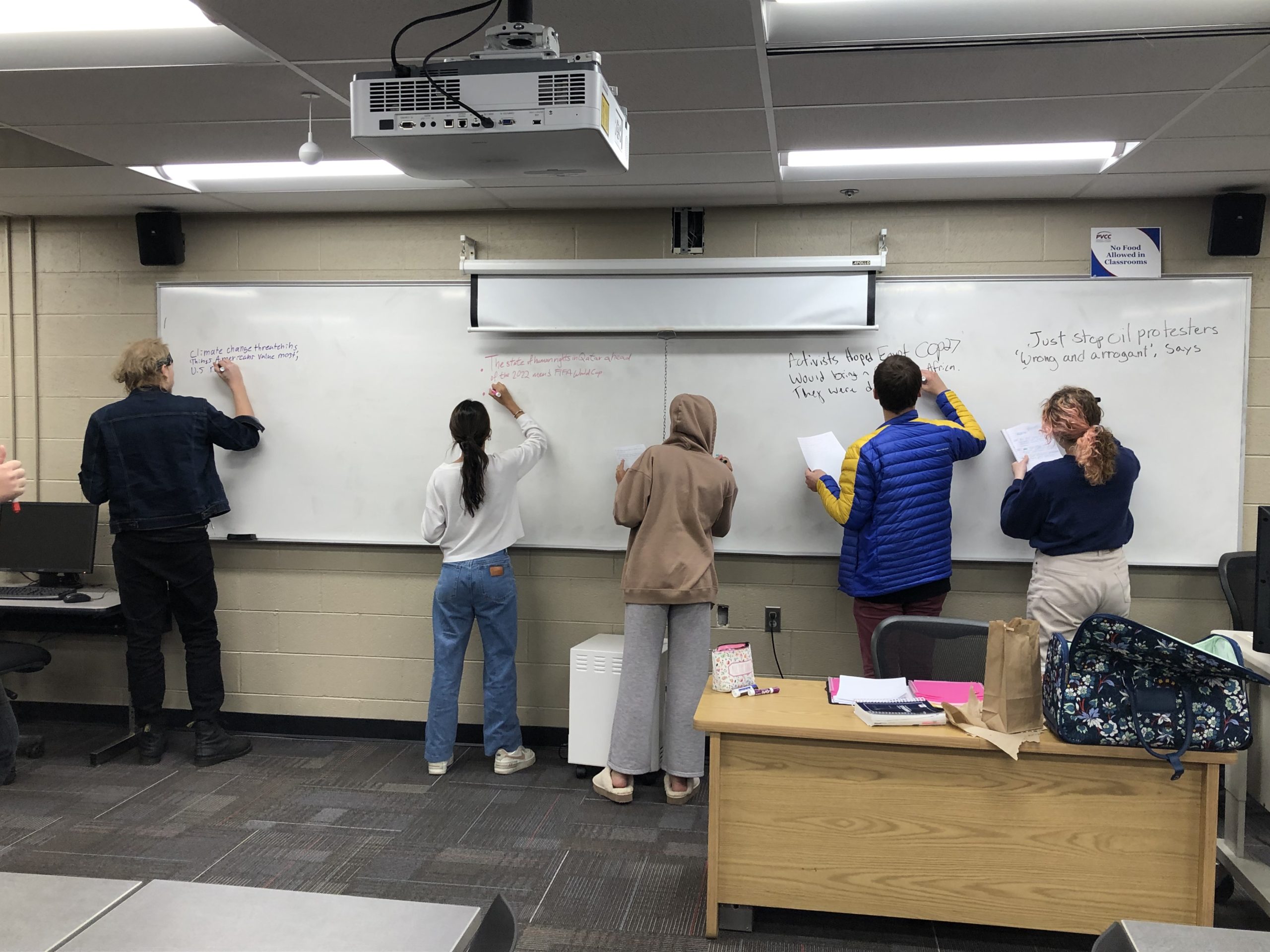
SPA 101 meets in room D334 on Mondays & Wednesdays at 9:35-11:35 a.m. and at 2:20-4:20 p.m. But no matter the time, Grajales-Díaz manages to get his students alert and learning.
In SPA 101, students will learn basic grammar and vocabulary, gradually improving communication and learning more complex structures to eventually get students ready for more intermediate-level skills. Grajales-Díaz says that his goal is “that they continue learning the language.” He says that SPA 101 is like a building block, the basic foundations of the language. The main topics covered in this class are related to students’ lives, such as school, family, food, and traveling. It also teaches grammatical structures within each topic, like the present tense of verbs, using direct and indirect object pronouns, and many of the grammatical structures that help form sentences.
Taking SPA 101, students may also explore the multiple cultures of Spanish countries with readings within the textbook (Puntos de Partida) named Enfoque Cultural, which translates to Cultural Focus. The textbook is provided through the class on McGraw-Hill Connect. Many students use the digital textbook in class because it is cheaper and more accessible. The textbook also has a tool called the workbook with exercises that correlate to what is taught in class, which is considered the main homework of the class. It is interactive, so students can easily navigate through the exercises.
Grajales-Díaz acknowledges that students may find it difficult to read the instructions and says, “I know they are using now the Google Translate to get the instructions. And for that, I think AI does a good job.” He finds that when students know what the instructions are asking of them, they can address the questions more effectively.
He also teaches online classes and uses tools that he doesn’t use face-to-face. Unlike online classes, face-to-face classes offer the opportunity to speak with other students and the professor. While online, students are mostly on their own with the material and recordings. To help with this, Grajales-Díaz explores the use of other tools, such as study abroad, which is a simulation of going abroad and interacting with native speakers.
Besides teaching Spanish, Grajales-Díaz enjoys reading. He especially enjoys reading history, philosophy, and literature. He also enjoys going out in nature, jogging, running, and riding his bike, which he enjoys talking about with his students.
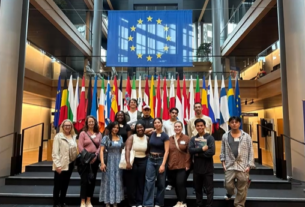
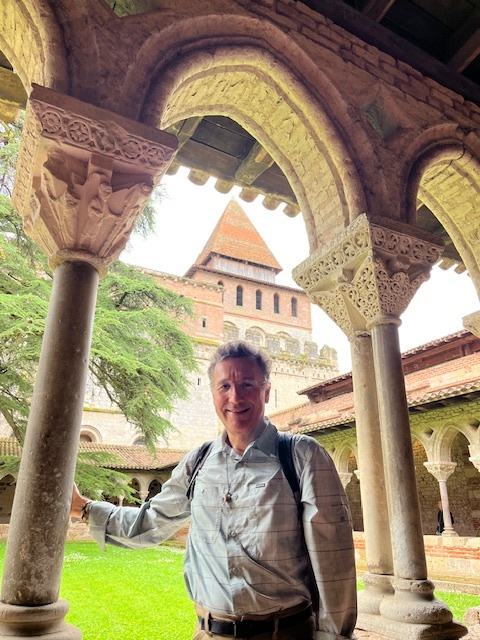
For the past 16 years, Grajales-Díaz has been teaching Spanish language and culture courses at all levels. He has also been involved in various projects, such as studying abroad, traveling to countries such as Central America, Costa Rica, Mexico, and Spain. Grajales-Díaz describes these experiences as “really rewarding for me and my students as well. It’s like an eye opener for them.”
Some advice Grajales-Díaz would like to give students is to seek out support, to not be afraid to go to his office and ask questions. Located in the Dickinson Building, his office is on the third floor, room D329. His office hours are Monday & Wednesday from 1-2 p.m. and Tuesday & Thursday at 11 a.m. and 2-4 p.m. If times conflict with student schedules, they may arrange another time that is suitable for both the professor and students. He also advises students to take advantage of other tools they have available, such as the tutoring center. Grajales-Díaz also suggests that students be a part of the Spanish club, which he runs. Grajales-Díaz says that his advice can be applied to any other class students may have. Grajales-Díaz says, “Instructors are here to provide support and guidance.”