

Physical and Historical Geology: 2 Science Credit Courses that will enhance your world view
“Students should ask themselves if they’re earthlings, and if the answer to that question is yes, then they should ask whether they want to know anything about the planet they’re gonna spend their whole lives on, and if the answer to that question is yes, boy have I got the course for you,” Associate Professor of Geology Callan Bentley said. Geology, the study of rocks and minerals, is a wide field that encompasses everything that happens on Earth. With discussions of volcanic eruptions, mountain building, glaciers, space, earthquakes, crystals, dinosaurs, and more, students who take geology will learn the awesome story of Earth’s processes and past.
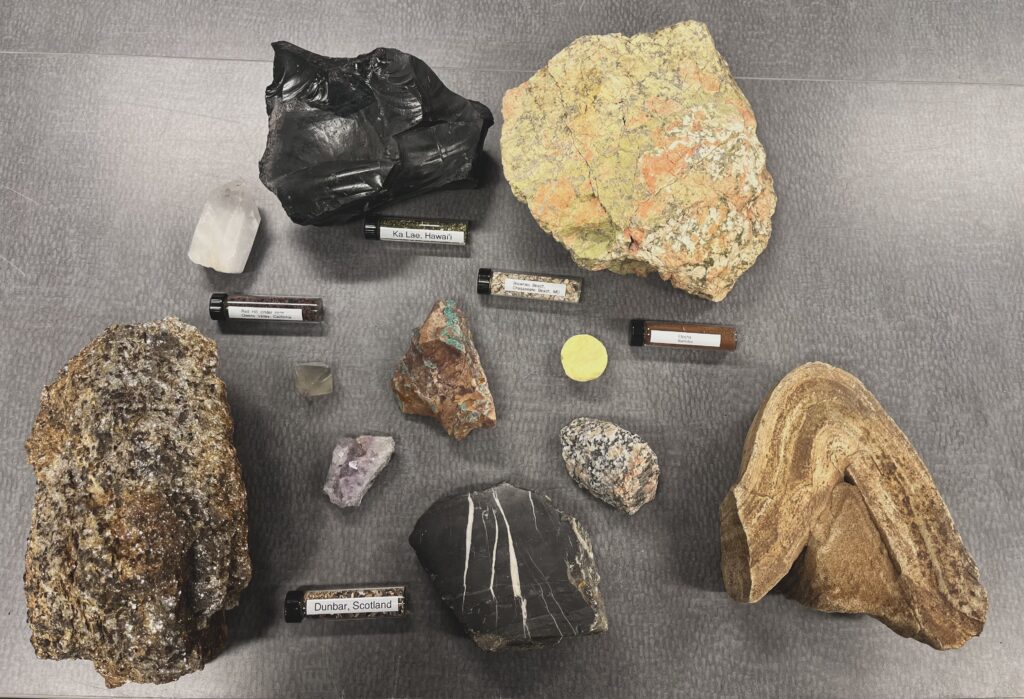
Physical Geology (GOL 105) is a class offered every semester in person on Tuesday and Thursday mornings, giving students a beginner-friendly guide through billions of years of Earth history through rocks, minerals, and landscapes. This class answers questions about the planet, such as: Where do mountains come from? What exactly are earthquakes? How do crystals and gems form? There are no prerequisites required to take this class, just enthusiasm for learning science. Luckily, the lab portion of this science with lab course is included in its twice-a-week schedule, so no additional professors or schedule planning are needed! Each day, the course is structured as half lecture, half lab, so students will get plenty of time for hands-on experiences with samples just like the photos discussed during classes
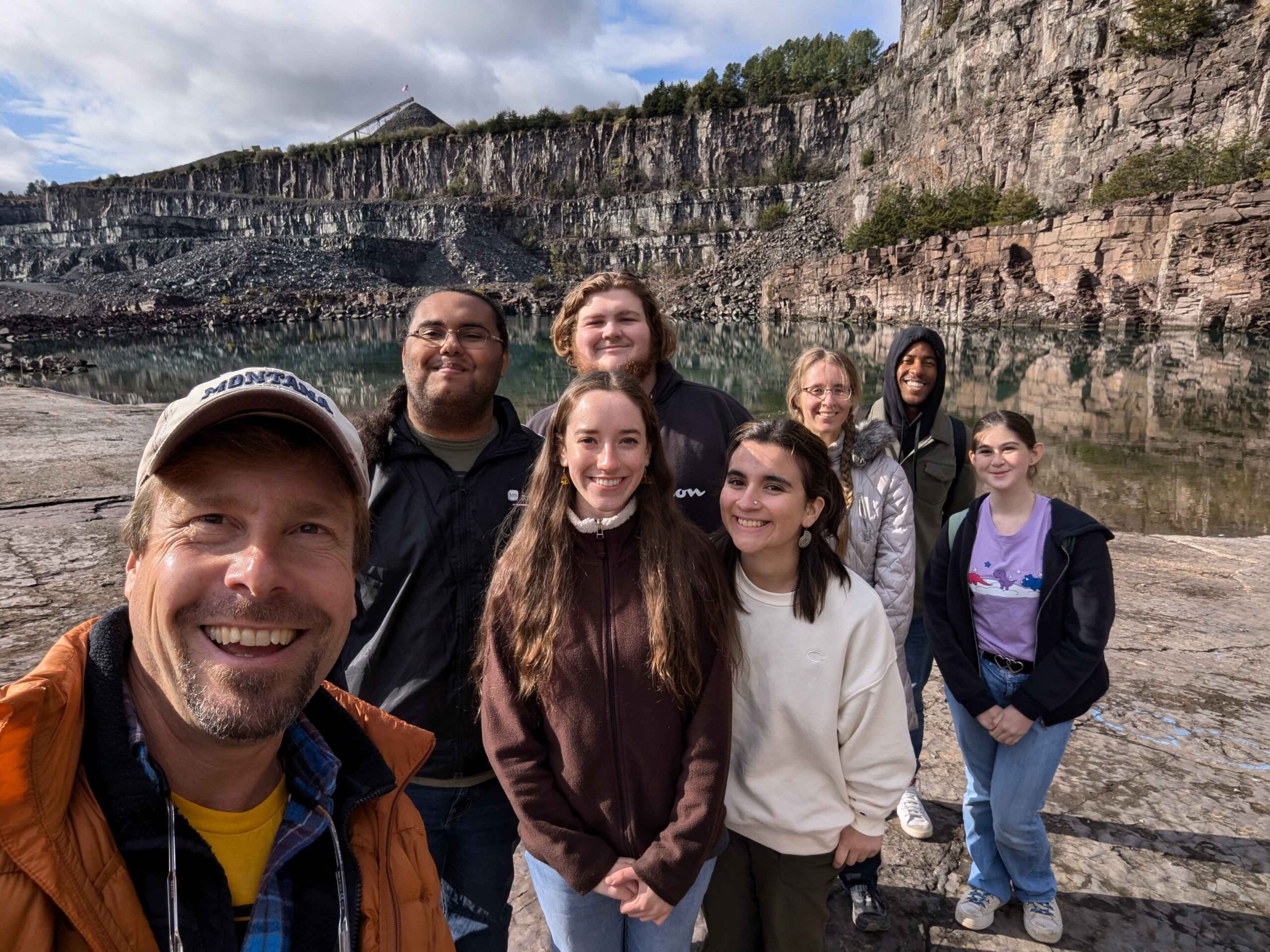
Bentley has been the full-time on-campus geology professor here at PVCC since 2020 and has been teaching full-time with Virginia Community Colleges since 2006. After growing up in northern Virginia, Bentley went on to get his Bachelor of Science in Geology at the College of William & Mary, then his master’s in geology at the University of Maryland, and finally his Master’s of Science Education degree at Montana State University. He is extremely well-traveled, visiting over 30 countries and every US state. Bentley is also a co-author of the free online Historical Geology textbook that allows students to access updated information for free and anywhere around the world.
With a 4.9/5 stars on RateMyProfessors.com, 98% of students agree that Professor Bentley is passionate and enthusiastic about both his pupils and geology. He shares his love of geological travel with students, as each year he takes a group of students into the real world each spring break on a field course. From the deserts of California to the volcanoes of Costa Rica and beyond, students taking his field course learn tons about the extensive research and fieldwork that goes into geology and STEM.
Professor Bentley also teaches Historical Geology (GOL 106) each semester on Monday and Wednesday mornings. It is a perfect follow-up to physical geology, and no prerequisites are required for this class either. This class is perfect for dinosaur enthusiasts, aspiring paleontologists, and space lovers. For other students intimidated by reading that sentence, don’t be. This class has a crash course in all the geology basics needed to ace the course. Historical Geology answers questions such as: What really were dinosaurs? How and when did the Moon form? How old is planet Earth? How did dinosaurs die?
When asked why students should take Historical Geology, Bentley said, “Physical geology is very much about the planet as it exists and hazards and resources and nuts and bolts. But historical geology speaks to the fact that, as humans, we like telling stories, and we like knowing where things came from and what’s important. Twists of fate ended up changing the trajectory of that narrative, so historical geology takes as its subject the planet Earth’s history through time, and in many ways, it’s basically like reading The Earth’s autobiography. So if the Earth wrote her autobiography, now we’re coming along, we’re trying to read that. That’s essentially the aim of historical geology. The autobiography was written in the language of rock. So really it’s a foreign language class. You have to learn how to speak rock in order to decode that narrative.”
PVCC’s geology program has countless additional opportunities outside of these two classes, such as field courses, field trips through the geology club, and bimonthly hikes. With the help of Professor Callan Bentley, any student can become a geologist. The rocks beneath PVCC’s campus tell Virginia’s history, from being covered in lava to being deep under the ocean, and after taking a course, students will be able to recount this tale by hearing what’s buried in the hillside. For any student who is intrigued by rocks or minerals, Physical or Historical Geology is the class for them.