



The SOSAC: A “haven on campus” for students at PVCC
First-generation and low-income students face numerous challenges and obstacles in the already intimidating postsecondary environment. Many lack the financial and social resources necessary for success in college and after graduation. Often, these students have to balance academics with jobs and financial stress. PVCC students, however, are in luck. The Student Opportunity, Success and Achievement Center (SOSAC) is a resource to help low-income and first-generation students navigate college.
The SOSAC, located in room B313 of PVCC’s Bolick Center, provides a range of services dedicated to helping low-income and first-generation students succeed in college and beyond. Director of the SOSAC Amanda Key said that the center also provides a sense of community and belonging for these students, who are able to build connections and bond over shared experiences. The center is one of PVCC’s many resources designed to help all students make the most of their time at the school.
The SOSAC was developed and founded by Key, a first-generation student herself. Key originally developed the Student Financial Resource Center, where she was able to interact with students and directly witness first-generation students’ need for increased support. This inspired her to create the SOSAC. Key is currently working on a first-generation club with biweekly meetings and a monthly newsletter, which she said will have a huge impact.
According to the SOSAC’s website, its mission is “to empower, support, and advocate for students who may face unique challenges in navigating the college experience.” First-generation students are less likely to earn a degree or continue to postgraduate education than continuing-education students, as reported by FirstGenForward. A 2025 Trellis Strategies report found that first-generation students were also at a higher risk for mental health issues and financial difficulties, and experienced a lack of basic necessities at a higher rate than continuing-education students. A contributing factor to these obstacles is a lack of guidance for first-generation students.
Among the services offered by the SOSAC are academic advising and support, career planning, application assistance, and regular workshops and meetings. At the SOSAC, students can find assistance in planning their time at PVCC and after graduation, learn about scholarships and financial aid as well as how to apply for these resources, meet with volunteer coaches dedicated to helping individual students navigate college and graduation, and connect with a team to establish their goals and address obstacles to those goals. The full list of services provided by the SOSAC is on their website.
Key has already observed the impact of the SOSAC on the students she works with. She shared stories of students who were able to travel internationally because the SOSAC connected them to study-abroad programs, students who were encouraged to travel to the General Assembly and speak on behalf of first-generation students, and students who became more independent as they gained access to important resources they had not realized were available. Key said that the people at the SOSAC “celebrate small steps and small successes” for each student.
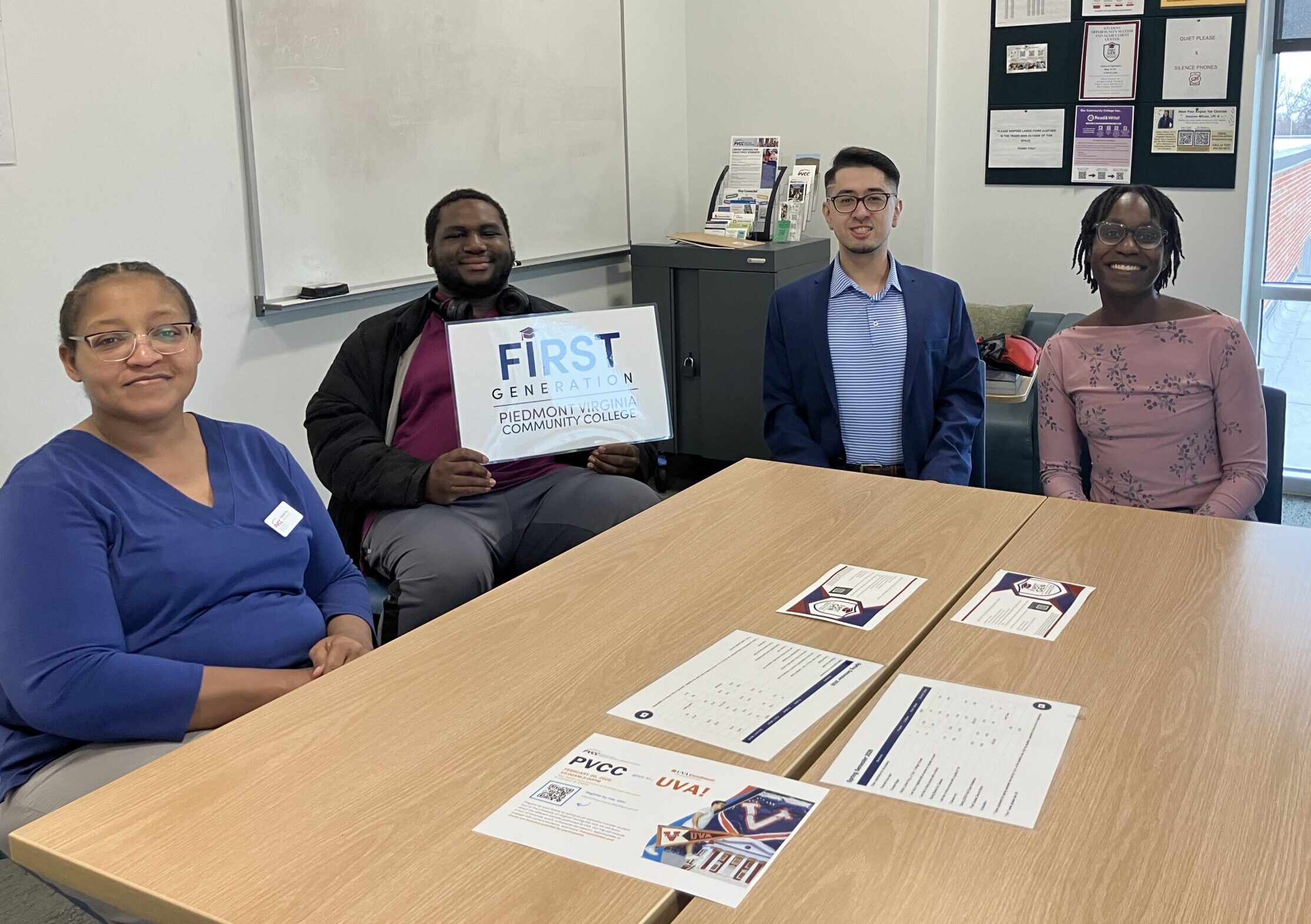
One student whose successes Key emphasized is Akinwunmi “King” Akanmu, a Work-Study student and leader at the SOSAC. Key described how, when Akanmu first entered the SOSAC, he was shy and nervous. Now, Akanmu provides assistance and guidance for other students, is ahead in his classes, and Key calls him a “social butterfly.” Key said, “Students may come through those doors by themselves, but when they leave, they leave as a group.”
As a Work-Study student at the SOSAC, Akanmu has observed many students initially struggling to navigate college and said the SOSAC makes these students feel welcome and at home. Abdul Nazary, another student involved with the SOSAC, said the center offers an “abundance of opportunities,” providing guidance and assurance for low-income and first-generation students. He added that the SOSAC provides an inclusive setting for students with similar backgrounds who face similar challenges to connect and share their experiences. Maryliz, another student at the SOSAC, called the center a “haven on campus.”
While the SOSAC is intended to help primarily low-income and first-generation students, Key noted that the SOSAC’s “doors are open to anyone that needs to find their space,” as long as they are first-generation friendly. However, she warned that she will hold students accountable, whether it be for academics or their general well-being.