




PVCC Students Advocate at the Virginia General Assembly
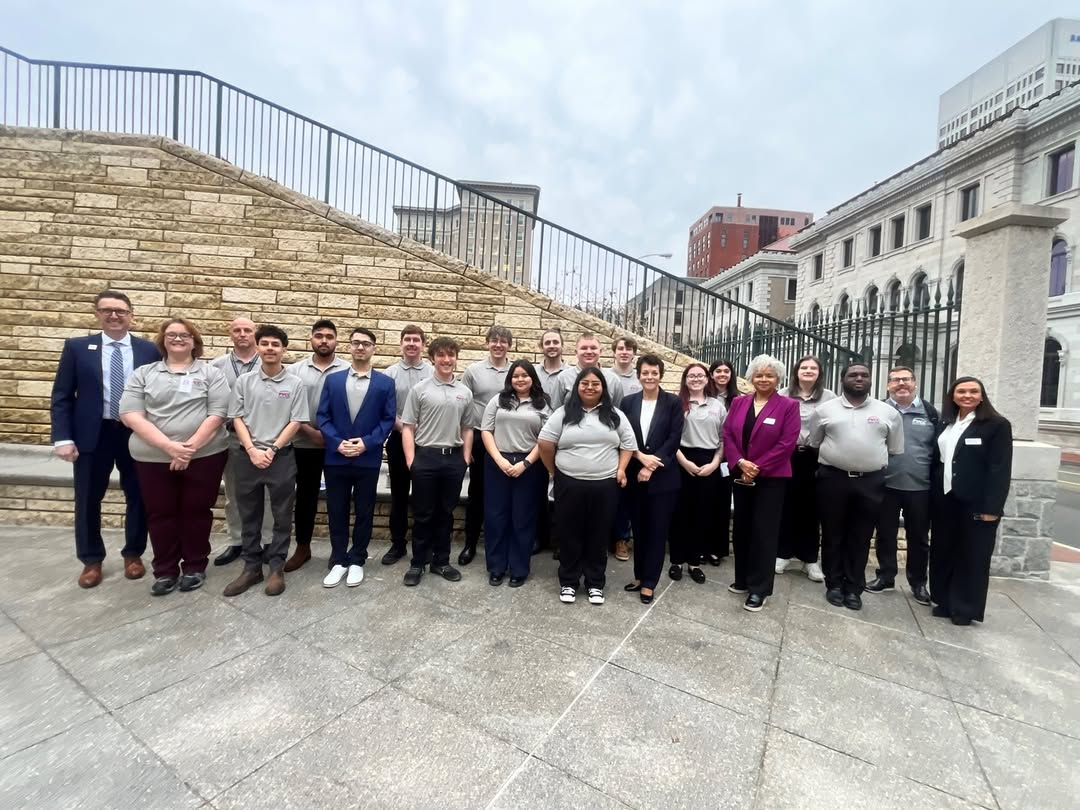
On Feb. 18, a dedicated group of PVCC students traveled to Richmond to meet with state legislators, sharing their personal stories and advocating for increased support and funding for community colleges across Virginia.
Departing early in the morning on a chartered bus, a group of students, chosen by President Jean Runyon and Coordinator of Student Life and Engagement Mary-Evelyn Sellars, embarked on a mission to demonstrate the vital role community colleges play in shaping lives and strengthening the economy. Many of these students are first-generation college attendees, balancing work, family, and educational commitments. Some commute over two hours daily, utilizing public transportation or personal vehicles, exemplifying their resilience and dedication.
During a heartfelt speech, Sellars expressed her pride and love for these students, emphasizing that they embody the greatness of PVCC. “You are family, and I love all of you,” she said, tears welling in her eyes. Despite the daily challenges, these students are committed to advocating for positive change, knowing that their efforts will benefit future generations.
Per the Capital Pathways pamphlet that was given to students prior to arrival at the General Assembly, community colleges are a vital part of Virginia’s higher education system. They serve over 230,000 individuals annually and have an $11.6 billion economic impact across the state. Remarkably, 46% of all public undergraduates in Virginia are enrolled in community colleges, reflecting community colleges’ accessibility and importance.
These institutions produce a highly skilled workforce, with 95% of fast-forward graduates employed within six months of certification. Additionally, 81% of Virginia Community College System (VCCS) students stay within Virginia after completing their education, contributing to local economies and communities.
Completing an associate degree at a Virginia community college can save students an average of $21,423 in college costs compared to starting at a four-year university. This affordability makes higher education accessible to many, especially those from underserved backgrounds, providing vital career and technical training. Despite their significant contributions, community colleges receive only about half the funding per student compared to four-year institutions.
State Council of Higher Education for Virginia (SCHEV) student ambassador Abdul Nazary, who co-chairs the Finance Subcommittee, presented his findings on “time poverty”: the hidden barriers of work hours, commuting, caregiving, and other responsibilities that hinder student success. His research underscores that simply lowering tuition is not enough; addressing these structural barriers is essential to improving completion rates and student persistence. Nazary ended his presentation by saying, “Higher completion rates won’t happen unless we confront the structural time burdens that quietly push students out of the system.”
During their visit, students shared their personal stories with Virginia legislators. Lance Shelton, a first-generation student who is attending PVCC, plans to graduate this spring and transfer to UVA’s Batten School of Public Policy and Leadership. There, Shelton will be pursuing a bachelor’s degree, majoring in public policy. His and fellow classmates’ stories resonated with legislators, including Delegate Amy Laufer, who took a journalism class at PVCC.
Students emphasized the importance of increased funding to expand programs, improve facilities, and keep education affordable, articulating how data shows that community colleges produce a substantial portion of the state’s workforce, with many students entering high-demand fields such as nursing, dental assistance, and manufacturing.
Prominent figures such as VCCS Chancellor Dr. David Doré and Lieutenant Governor Ghazala Hashmi addressed the students. Doré, a first-generation college student himself, emphasized that every learner can succeed and highlighted the importance of creating opportunities for diverse populations. Hashmi, the first Muslim elected to statewide office in the U.S., shared her journey from community college professor to state leader, inspiring students to aim high.
The students’ trip culminated in meetings with senators and delegates, where they advocated for more funding to improve facilities, expand programs, and keep education affordable. They urged their representatives to recognize the vital role community colleges play in Virginia’s economy and to support policies that enable these institutions to do more with less.
As Virginia’s community colleges continue to educate and empower thousands of students each year, their advocates remain committed to ensuring they receive the resources necessary to thrive. With increased funding and support, PVCC and other institutions can expand their programs, serve more students, and contribute even more to the prosperity of Virginia.
The message from PVCC students is clear: Community colleges are the backbone of higher education in Virginia, and their success depends on community and legislative support. Sharing personal stories about the impact of education with representatives helps them understand its value in strengthening Virginia’s future.