

Braver Angels Genetic Engineering Debate
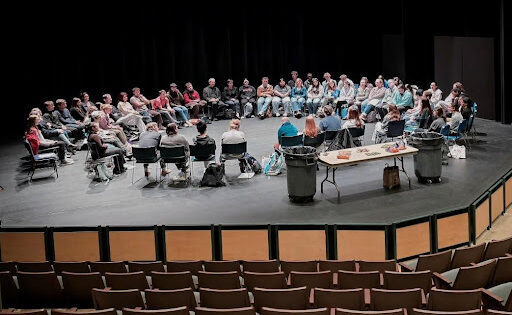
PVCC held a debate on genetic engineering, attracting a diverse audience and multiple speakers on Monday, Nov. 17, in the Dickinson Theater. Co-sponsored by Dr. Anne Allison, a biology professor at PVCC, and the college’s One Book Program, the event drew an audience of over 54 students and faculty members eager to explore one of the most pressing scientific and ethical issues of our time.
Organized by the College Debates & Discourse Alliance, a collaborative effort involving the American Council of Trustees and Alumni (ACTA), Braver Angels, and Bridge USA, the debate emphasized respectful discussion, empathy, and the respectful exchange of ideas. Braver Angels debate was designed to promote open dialogue, with speakers and audience members engaging in a parliamentary format that encouraged deep listening and thoughtful questioning.
The debate centered around the provocative question: “Should we design human beings?” It featured four speakers, two affirming and two opposing the proposition. Each speaker was given three to four minutes to present their arguments and evidence, followed by audience questions directed to the speakers. Audience members were instructed to address questions in third person and to express their reactions through non-verbal cues such as snapping fingers or knocking on chairs, rather than clapping, encouraging a respectful and attentive environment.
The first speaker supported the idea of genetic enhancement, arguing that many human ailments; such as sickle cell disease, cancer, and vision impairments are “broken” parts that could be fixed to improve quality of life and personal freedom. Their questioners challenged them on defining what constitutes “broken” and how to measure a better quality of life.
Conversely, the negative speaker warned of the potential dangers of designing humans, cautioning that it could give individuals excessive power and risk unleashing unforeseen consequences akin to Pandora’s box. Questions were raised about ethical boundaries, consent, and societal impacts, including the fairness of access to genetic modifications and the risk of creating disparities or new forms of discrimination.
Throughout the debate, participants revisited historical tragedies such as Nazi Germany’s obsession with racial purity and forced sterilizations, emphasizing the importance of preventing such acts of violence from recurring under the pretext of genetic engineering. The topic of abortion was also touched upon, when questioning if it is morally correct to disregard a human if they have “broken” genetics or traits.
Audience engagement revealed a spectrum of perspectives. One student, Wilonja Hyandwi, remarked, “It’s not about the tool; it’s whose hand it ends up in,” highlighting concerns over control and regulation. The audience responded with a round of knocks on chairs, indicating a collective belief that the regulation of genetic technology will ultimately determine whether it benefits or harms humanity.
The discussion left many questions unanswered, illustrating the complexity of the topic. Issues such as accessibility, societal inequality, the potential for abuse, and the definition of normalcy remain open for debate. The event underscored the importance of respectful dialogue in navigating these challenging moral questions and reminded attendees that the future of human genetic engineering depends heavily on who sets the rules and safeguards.
Regulated by Douglas Sprei, director of the College Debates and Discourse Alliance, the event demonstrated that even contentious topics can be explored peacefully and thoughtfully. As Allison reflected on the discussion, it was clear that such conversations are essential for cultivating critical thinking and responsible decision making in a rapidly advancing scientific landscape.
This debate not only enlightened those in attendance but also reinforced the vital role of civil discourse in addressing society’s most profound ethical dilemmas, an essential step toward shaping a future where science and morality can walk hand in hand.